Home Lift Cost for 2 to 4 Floors in Delhi, India – Latest 2026 Price Guide


If you are planning to install a home lift for 2 to 4 floors in Delhi, the expected cost can vary significantly depending on the lift type, number of stops, load capacity, cabin size, shaft conditions, design, and installation requirements. As an indicative 2026 market range, residential lift projects in Delhi can fall around ₹5.5 lakh to ₹15 lakh or more, depending on the technology and level of customization. Recent Delhi-focused pricing sources show different ranges for hydraulic and traction/MRL systems, so the final quotation should always be based on the actual site and specifications.
For a 2- to 4-floor home, homeowners generally consider hydraulic lifts, traction lifts, and MRL elevators based on available space, budget, usage, and preferred design. The important point is that the cheapest quotation is not always the most economical choice over the long term.
Home Lift Cost for 2, 3 and 4 Floors
The number of floors is one of the first factors that affects the price of a residential elevator. More floors generally mean greater travel height, more landing arrangements, additional guide rail requirements, and potentially more installation work.
An indicative planning range may look like this:
Home Size | Approx. Lift Budget* |
2 Floors | ₹5.5 lakh – ₹9 lakh+ |
3 Floors | ₹6.5 lakh – ₹12 lakh+ |
4 Floors | ₹7.5 lakh – ₹15 lakh+ |
*These are indicative ranges rather than fixed market quotations. Actual pricing depends on elevator technology, capacity, cabin specifications, civil work, installation, and customization.
A customized premium elevator with designer interiors or additional smart features can cost considerably more.
What Determines the Home Lift Price in Delhi?
1. Type of Home Elevator
The type of elevator has a major effect on the project budget.
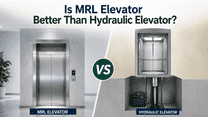
Hydraulic home lifts can be considered for low-rise residential applications where the building structure and installation conditions suit this technology. Traction and MRL elevators are also popular choices, especially where space efficiency and smooth operation are priorities.
An MRL elevator places its traction machinery within the lift shaft, eliminating the need for a conventional separate machine room. This can make it attractive for modern homes with limited construction space.
2. Number of Stops and Travel Height
A two-floor lift and a four-floor lift do not necessarily have the same project cost. Each additional stop can affect landing doors, control arrangements, wiring, guide rails, and installation requirements.
Before getting a quotation, provide the elevator company with the exact number of floors and stops rather than simply saying “2-4 floors.” This allows the supplier to recommend a suitable configuration and calculate the project more accurately.
3. Load Capacity and Cabin Size
The required lift capacity also influences the overall cost. A compact home elevator for two or three passengers will have different equipment requirements from a larger lift designed for four to six passengers or wheelchair accessibility.
Cabin dimensions can also change the project price. Larger cabins usually require corresponding changes in equipment, shaft dimensions, doors, and structural planning.
Think about how the elevator will actually be used. A lift intended mainly for family members may need a different specification from one that regularly carries elderly people, wheelchair users, groceries, or heavy household items.
4. Shaft, Pit and Overhead Requirements
Your home's existing structure can have a major impact on the final budget. During a new construction project, the shaft can be designed to meet the elevator manufacturer's requirements. Retrofitting a lift into an existing house may require additional civil and structural work.
Potential costs can include:
Shaft construction or modification
Pit preparation
Landing openings
Structural reinforcement
Electrical work
Flooring and finishing
Waterproofing
Installation and testing
This is why two homes with the same number of floors may receive very different elevator quotations.
5. Cabin Design and Customization
Home elevators are increasingly being designed as part of the interior rather than as purely functional equipment. Standard cabins are generally more economical, while premium finishes can increase the overall project cost.
Popular customization options include:
Stainless-steel finishes
Glass panels
Decorative ceilings
LED lighting
Mirrors
Premium flooring
Custom control panels
Designer handrails
For luxury villas, the elevator cabin can be customized to complement the home's interior theme.
6. Safety and Control Features
A residential elevator should be selected based on safety and suitability, not just appearance or price. Depending on the system, available features can include door interlocks, overload protection, emergency alarms, emergency lighting, safety brakes, automatic rescue functions, and communication systems.
Modern lift systems can also include monitoring and diagnostic technologies. When comparing quotations, check exactly which safety and control features are included rather than assuming they are standard across every model.
India's standards framework for lifts continues to evolve; BIS currently lists IS 17900 (Part 7/Sec 4):2025 for lifts for persons with disabilities, while ISO has published ISO 8100-1:2026 covering safety rules for the construction and installation of passenger and goods-passenger lifts. Applicable local requirements should be confirmed for the specific project.
7. Installation, Warranty and Maintenance
The quoted lift price may not always include every project expense. Ask the elevator company whether the proposal covers transportation, installation, electrical work, civil work, testing, taxes, warranty, and post-installation service.
Maintenance should also be considered before making a purchase. A lift is a long-term system, so access to spare parts, trained technicians, preventive maintenance, and responsive service can be just as important as the initial purchase price.
How to Reduce Home Lift Installation Cost
Reducing the budget does not necessarily mean choosing the cheapest elevator. A better approach is to plan the project early and avoid unnecessary structural modifications.
You can potentially control costs by selecting an appropriate capacity, keeping cabin customization practical, finalizing the shaft dimensions before construction, and comparing complete quotations from experienced elevator manufacturers.
Ask every supplier for a detailed cost breakdown so you can compare equivalent specifications rather than just the headline price.
Is a Home Lift Worth the Investment?
For many homeowners, a lift can improve accessibility, convenience, and movement between floors. It can be especially useful for multi-generational households, elderly family members, people with mobility challenges, and homes designed across multiple levels.
Beyond convenience, a well-designed residential elevator can become an integrated part of the property's architecture.
Suggested Read: Is a Home Elevator Worth the Investment?
Final Thoughts
The home lift cost for 2 to 4 floors in Delhi generally depends on technology, travel height, capacity, cabin size, shaft conditions, customization, safety equipment, installation, and service support. An indicative 2026 budget of around ₹5.5 lakh to ₹15 lakh+ can be useful for initial planning, but the actual cost should be determined through a site assessment and detailed technical quotation.
The best residential elevator is not necessarily the one with the lowest price. Focus on safety, reliability, space requirements, energy efficiency, installation quality, warranty, and long-term maintenance to make a better investment decision.
FAQs
What is the approximate cost of a home lift for 2 floors in Delhi?
A basic residential lift project may start around ₹5.5 lakh, while premium specifications can increase the cost significantly.
How much does a home lift for 4 floors cost?
A 4-floor residential lift can commonly fall toward the upper end of the indicative ₹7.5 lakh–₹15 lakh+ planning range, depending on specifications and installation conditions.
Which lift is better for a 2-4 floor home?
Hydraulic, traction, and MRL elevators can all be considered. The right choice depends on available space, usage, construction conditions, budget, and desired features.
Does customization increase the home elevator price?
Yes. Premium cabin materials, glass, lighting, flooring, control panels, and other design elements can increase the overall cost.
Is maintenance included in the home lift price?
Not always. Ask the elevator company specifically whether installation, warranty, AMC, maintenance, and spare-parts support are included in the quotation.


Comments