Why Eco-Friendly Elevators Are Becoming the Next Big Trend

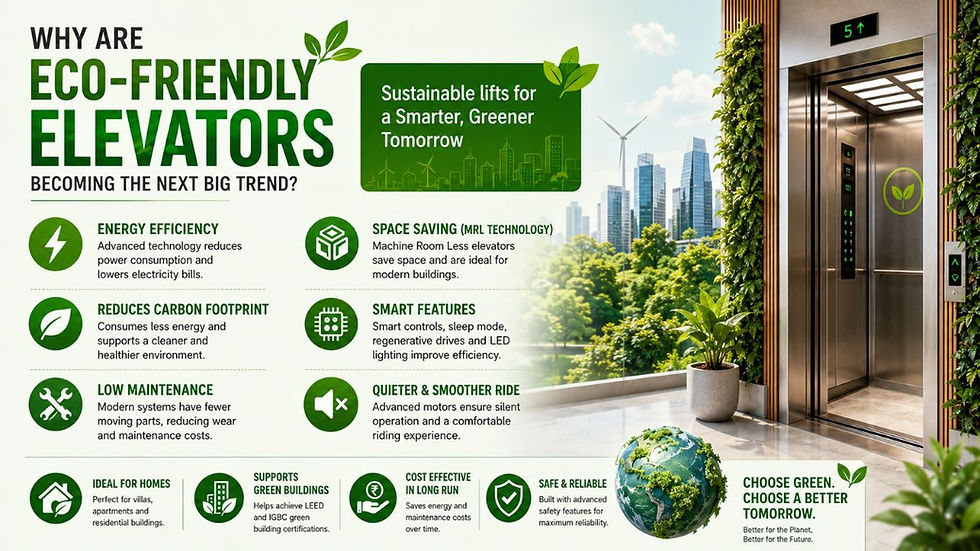
Modern buildings are no longer judged only by their height or design - today, energy efficiency and sustainability matter just as much. From luxury apartments to commercial skyscrapers, elevators are becoming smarter, greener, and more energy-efficient than ever before. As electricity costs rise and environmental concerns grow, eco-friendly elevators are quickly becoming one of the biggest trends in the construction and real estate industry.
Elevators Are Surprisingly Big Energy Consumers
Most people don’t realise it, but elevators consume a significant amount of electricity every single day. In large residential towers, shopping malls, hotels, and office buildings, lifts operate continuously, which leads to massive energy consumption over time. Traditional elevator systems often rely on outdated motors and inefficient technologies that waste energy during operation, braking, and idle time.
This growing concern is one of the key reasons why developers and property owners are now shifting toward energy-efficient elevators that reduce electricity usage while improving performance.
Regenerative Drives: Turning Braking Into Power
One of the most revolutionary advancements in green elevator technology is the regenerative drive system. Similar to regenerative braking in electric vehicles, this system captures energy generated when the elevator slows down or moves downward with a heavy load.
Instead of wasting that energy as heat, the system converts it into reusable electricity and sends it back into the building’s power supply.
Benefits of Regenerative Drives:
Reduce overall electricity consumption
Lower building operating costs
Generate reusable energy
Improve elevator efficiency
Reduce heat production in machine rooms
In high-rise buildings, regenerative systems can reduce elevator energy usage by up to 75%, making them a smart long-term investment.
LED Lighting and Smart Standby Modes Save Energy
Modern eco-friendly elevators are designed to reduce waste even when not in active use. Older elevator cabins used fluorescent lighting that consumed electricity continuously. Today’s elevators use LED lighting systems that consume far less power and last significantly longer.
Smart standby technology adds another layer of efficiency by automatically:
Dimming lights
Switching off displays
Reducing ventilation fan speed
Activating sleep mode during inactivity
These small improvements create huge annual energy savings, especially in buildings where elevators operate around the clock.
Smart AI Dispatch Systems Improve Efficiency
Traditional elevators often respond inefficiently to passenger requests, leading to unnecessary trips, frequent stops, and wasted energy. Smart AI-powered destination dispatch systems are changing that completely.
These systems analyse passenger traffic patterns and intelligently group people travelling to similar floors. This reduces:
Waiting time
Number of elevator trips
Electricity consumption
Mechanical wear and tear
The result is a smoother, faster, and more energy-efficient elevator experience for everyone.
Green Building Certifications Are Driving Demand
Sustainable building certifications like LEED and BREEAM are now highly valued in the real estate industry. Developers aiming for premium certifications are increasingly investing in energy-efficient elevator systems because elevators directly impact a building’s environmental score.
Eco-friendly elevators help buildings:
Achieve green certifications
Increase property value
Attract environmentally conscious buyers
Reduce long-term operational costs
As green infrastructure becomes a priority worldwide, sustainable elevators are rapidly becoming a standard feature rather than a luxury.
Cost Savings Make Eco Elevators a Smart Investment
Although eco-friendly elevators may require a slightly higher upfront investment, the long-term savings are substantial. Building owners can recover the additional cost through lower electricity bills, reduced maintenance expenses, and improved operational efficiency.
Long-Term Financial Benefits:
Lower power consumption
Reduced maintenance costs
Longer component lifespan
Reduced carbon footprint
Better resale value for properties
Most building owners recover their investment within 5–7 years, making green elevators financially practical as well as environmentally responsible.
India Is Rapidly Adopting Eco-Friendly Elevators
India’s real estate and infrastructure sectors are growing rapidly, especially in cities like Delhi, Mumbai, Bengaluru, and Hyderabad. As urban buildings become taller and more modern, demand for sustainable elevator systems is increasing significantly.
Government initiatives supporting energy efficiency and smart infrastructure are also encouraging developers to adopt eco-certified elevator technologies.
This trend is closely connected to the growing popularity of modern residential lifts discussed in “Smart Home Elevators in India 2026: Features, Benefits & Future Trends.” Homeowners today want elevators that are not only stylish and compact but also energy-efficient and future-ready.
Similarly, the demand for sustainable designs is influencing buyers searching for “Which Are the Best Home Elevators for Small Houses in India?” because compact and eco-friendly systems are ideal for modern urban homes where space and energy savings both matter.
MRL Elevators Are Leading the Green Revolution
Machine Room Less (MRL) elevators are among the most energy-efficient lift systems available today. Unlike traditional hydraulic lifts, MRL elevators eliminate the need for separate machine rooms and large quantities of hydraulic oil.
Advantages of MRL Elevators:
Lower energy consumption
Space-saving design
Reduced maintenance
Less environmental impact
Quieter operation
This growing shift toward sustainable lift technology directly connects with the topic
“What Is an MRL Elevator and Why Is It Gaining Popularity in Modern Buildings?” because MRL systems are becoming the preferred choice for eco-conscious residential and commercial projects.
Sustainable Materials and Eco-Friendly Manufacturing
Modern elevator manufacturers are also focusing on sustainability during production.
Many companies now use:
Recycled steel
Eco-friendly cabin materials
Low-friction components
Reduced lubrication systems
Sustainable manufacturing processes
These improvements help minimise waste, lower carbon emissions, and create greener buildings overall.
Global Elevator Companies Are Investing Heavily
Leading elevator manufacturers worldwide are investing billions into sustainable technology.
Companies are developing:
Lightweight carbon fibre ropes
Smart energy management systems
AI-powered traffic optimisation
Touchless elevator controls
Advanced regenerative technologies
As innovation accelerates, eco-friendly elevators are becoming more advanced, reliable, and affordable for both residential and commercial applications.
Conclusion
Eco-friendly elevators are no longer just an emerging trend - they are becoming the future of vertical transportation. As cities grow taller, energy costs rise, and sustainability becomes essential, modern buildings must adopt smarter and greener technologies.
From regenerative drives and LED lighting to AI dispatch systems and MRL elevators, sustainable lift solutions are transforming how buildings operate. Whether for residential homes, villas, apartments, or commercial towers, green elevators offer the perfect balance of efficiency, comfort, safety, and long-term savings.
The future of elevators is not only smart and luxurious - it is sustainable.

Comments